Favela tourism isn't the sin; making residents the scenery is
Viral drone videos in Rocinha turn a neighborhood into a runway. Tourism can still help residents, but only if they own the story and the revenue.
Photo: chensiyuan / Wikimedia Commons (CC BY-SA 4.0)
What do you call a catwalk built on a rooftop in someone else's neighborhood? In Rio de Janeiro, apparently, a must-do attraction, and people will wait up to two hours for it. The favela tourism debate has a new, very photogenic face, and it is worth asking who exactly is being photographed.
The setup is simple. In Rocinha, Rio's largest favela, tourists pose on a rooftop while a drone pulls back to reveal the hillside community. As AFP reported, the price is at least 150 reais (about $30), and people retouch their makeup in line. Influencer Ingrid Ohara, with 12 million Instagram followers and 20 million on TikTok, joined in. Dozens of commenters accused visitors of romanticizing poverty and crime.
The backdrop problem is real, and it isn't about the tourists' intentions
Cecilia Olliveira, director of the Fogo Cruzado Institute, put the problem precisely. She acknowledged that some residents see this as legitimate income. The trouble, she said, begins when the favela stops being a vibrant, complex neighborhood marked by inequality and becomes just an exotic contrast or a setting for eye-catching content.
We agree, and we'd go further: the format itself is the issue. A drone shot that pulls away from a posing tourist and reveals an entire hillside community is a visual grammar of "me, and the scenery." It doesn't matter if the tourist is sincere, as Costa Rican visitor Gabriel Pai seems to be when he calls the place enchanting. In our view, the algorithm rewards the contrast, not the context. A clip about water, policing or schools is a much harder sell.
But "just don't go" is a luxury opinion
Here is where the easy outrage runs out. According to DW, the experience costs €20 to €60, and Renan Monteiro has trained 300 guides and 10 drone pilots. Twenty-six rooftops across Rocinha and Vidigal are in play, and their owners get paid. Pedro Lucas, 19, says the work changed his life because he had few prospects before. Telling these people the trend is degrading, from a distance and from a salary, is its own kind of condescension.
Notice also that this model is not the old jeep safari. Monteiro grew up in Rocinha, built fixed routes with community leaders, and made an app to cancel tours when police operations begin. That came after a Spanish tourist was killed in 2017 during a shootout between police and traffickers. It is a local business that learned from a tragedy. That counts for something.
The broader debate is not new, either. A RioOnWatch piece, undated, quotes a guide complaining about outside operators who photograph children and people in their homes without permission. The lesson looks old: the tour is not the problem; who runs it is.
Control of the story and the money is the whole test
So our thesis is a narrow one. Favela tourism works when residents own three things: the narrative, the routes and the revenue. By those standards, the Rocinha rooftop model is partly passing. The founder grew up there, rooftop owners are paid, and, according to the AP, one Paraguayan visitor noted that viral videos can give people the confidence to visit without fear. That is the stigma-busting argument at its best.
Where it fails, we think, is the story. The viral product is a tourist's performance, not a resident's account. And the numbers should give us pause: Na Favela Turismo counted 41,000 visitors in February alone in Rocinha and Vidigal, and DW says the ticket price is roughly a third of what favela residents earn in a month. The reporting we reviewed doesn't say how much of each ticket reaches residents beyond guides and rooftop owners, and that is the number we'd most like to see published. It's also the question any operator claiming "community-led" should be able to answer.
Our verdict
Don't boycott; interrogate. If you're going to Rio, book a resident-run tour, ask where the money goes, and skip the clip where you are the main character and the neighborhood is a screensaver. If you're making the video, give the camera to someone who lives there at least once. And if you run a favela tour, publish the revenue split. Poverty becomes scenery when only one side of the lens gets paid in attention. It becomes work when the people in the frame hold the receipt.
No topics yet: start the first one.
More stories
Thiago Navarro doesn't exist, and his hit proves we never cared who sings
An AI singer with millions of plays says less about the machine than about us: listeners follow the song, so the industry owes them an honest label.

The ‘Cheese Tax’ Lawsuits Prove Viral Sound Is Not Free Wallpaper
The LG and Kroger cases expose a marketing habit that treats creator-made audio as background noise—and may force brands to license memes like valuable media.

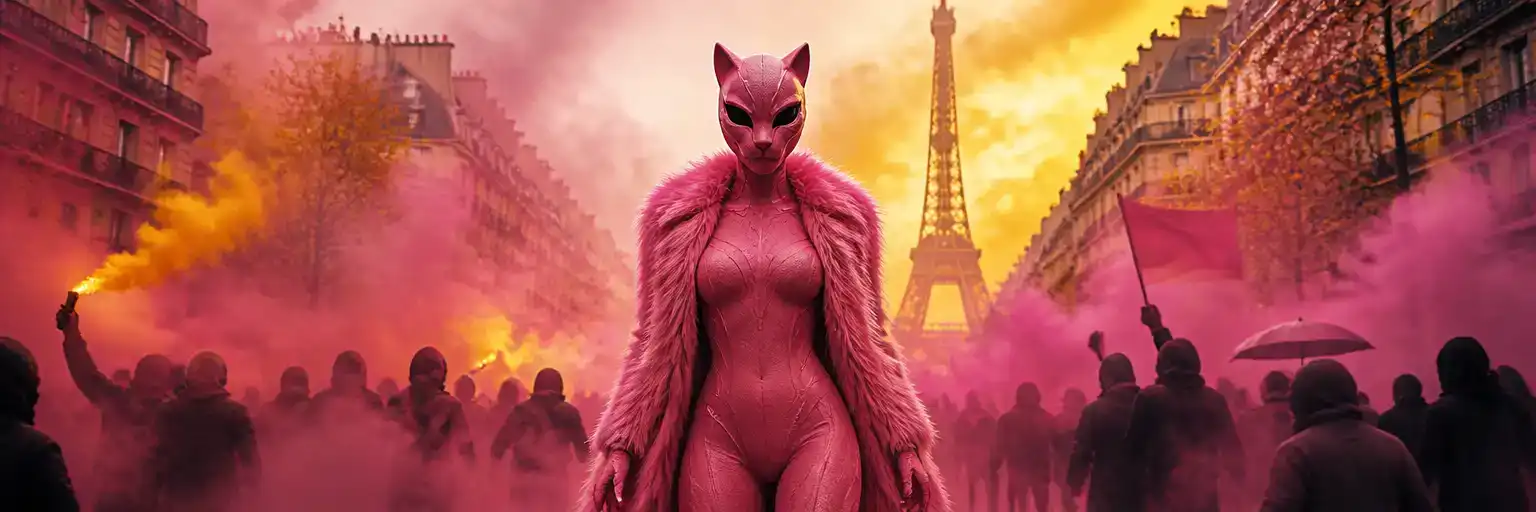
The Pink Panther Isn’t the Real Threat. Our Appetite for Easy Stories Is
An AI-made protest image and a genuinely chaotic Paris feed expose the same weakness: emotional clarity now travels faster than verification.
Viral Hits Are More Absurd Than Ever, And That's A Good Thing
Today's most captivating online content thrives on the truly unexpected and raw human reactions, reflecting our collective digital curiosities for authenticity and shared humor.