Kate's Mumbai Look Proves Royal Style Works When It Tells a Local Story
From an electric rickshaw to a red Anarkali, the Waleses' India trip shows that royal dressing lands when it carries a local story, not just a label.
Photo: Office of U.S. Ambassador to U.K. / Wikimedia Commons (Public domain)
Can a dress be diplomacy? In Mumbai this week, the Prince and Princess of Wales made a fair case that it can, as long as the dress has something to say. It also raises an awkward question: what happens when it only says a brand name?
Mumbai did serve up labels to chew on. Kate carried a burgundy velvet Prada evening bag, per British Vogue as cited by IBTimes, and a deep brown Hermès top-handle bag on the final day, according to Hindustan Times. We suspect many readers will go straight to "where can I buy it?" That is the wrong takeaway. The accessories were the footnote; the clothes did the real work.
The Anarkali did the talking, and the bag didn't have to
On Tuesday, November 17, Kate arrived at the sixth Earthshot Prize ceremony in a vermilion Anarkali by Indian designer Mahima Mahajan, in handwoven silk georgette with gold Banarasi detailing. William wore a black bandhgala by Manish Malhotra. IBTimes reports that the ceremony took place at the Jio World Convention Centre, with roughly 5,000 guests.
Here is the pairing we like. Two Indian designers, one couple, one green carpet. Nobody needs a caption to decode it. The outfits did what a speech can't: they made the visit look like it belonged in the room.
Then comes the detail that makes the look more interesting, not less. According to Mahajan's interview with Variety India, the Anarkali began as stock at a London boutique, and Kensington Palace asked for alterations because the available size was too big. Some will call that a letdown, since it isn't a one-off commission. We think it's the opposite. A palace shopping an Indian designer's existing line, then tailoring it, is closer to how real people dress than a couture reveal. Whether it's a statement or just logistics, it still pointed at an Indian maker rather than a European house.
The jewels were a history lesson, but only half of one
Kate paired the dress with the Emerald Tassel Suite that belonged to Queen Elizabeth II. Free Press Journal reports that it is said to have first appeared in 1989, and that Kate wore the necklace for the first time here.
We'd argue this is where the strategy gets a little less clean. Heirloom emeralds are a royal story, not an Indian one. They sit well against the gold embroidery, and the pairing is elegant. But it's a reminder that style diplomacy is always two messages at once: respect for the host, and a quiet reminder of who is visiting. The balance held here because the dress was the star and the jewels were support. Flip that ratio and you get costume-party royalty.
The craft school is the proof of concept
The best evidence for our thesis isn't on the red carpet. On the final day, the couple visited Chanakya, a Mumbai school that trains women in traditional hand-embroidery. LBC reports that some graduates make runway pieces for houses like Dior, Fendi and Valentino. The school's Sunayam Vaidya said Kate "brings with her a lot of attention so a lot of awareness and that translates into more sustainability of crafts."
That is the whole argument in one sentence. Attention is the currency royals have, and fashion is one of the few places where it can be spent on something concrete. The red Anarkali, the bandhgala and the embroidery school form a loop: wear the craft, visit the people who make it, let the cameras follow. Add the electric rickshaw, a Mahindra vehicle tied to one of the prize winners, and the trip's visual language stays consistent with its message.
Compare that with the alternative. A look that exists only to debut a handbag, however luxurious, would generate a day of "where to buy it" coverage and probably nothing else. That is a brand moment. "Wears an Indian designer, visits an embroidery school" is a story with a second act.
Verdict
Royal style diplomacy works when the wardrobe can be traced to a person, a place or a skill, and it fails when it can only be traced to a logo. By that test, Mumbai was a good week for the Waleses. Our advice: skip the label-hunting, look up Mahajan and Malhotra, and judge the next royal tour by one question. Who made the clothes, and did anyone go meet them?
No topics yet: start the first one.
More stories
Met Gala 2027's "everyday" theme is humility with a $100,000 ticket
After the Galliano cancellation, a theme about jeans and T-shirts looks like a safe retreat. But the red carpet will probably make the ordinary extraordinary anyway, and that's the point.
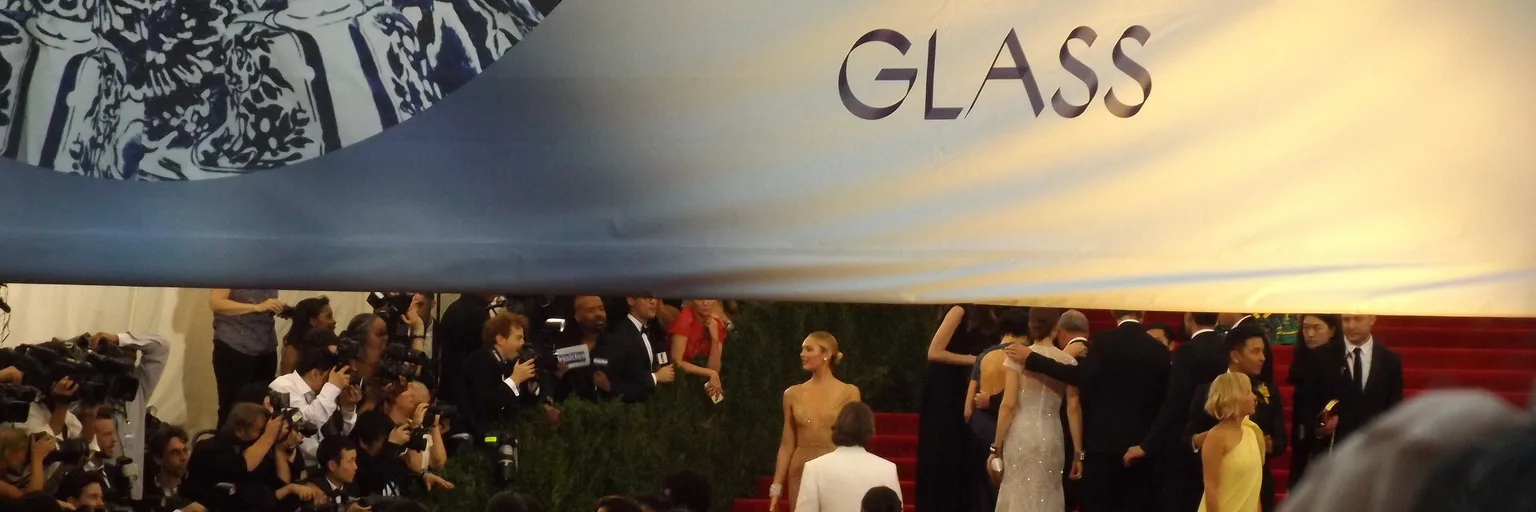
John Frieda was beauty's first influencer, and Frizz Ease was the proof
The stylist who cut Diana's hair also sold anti-frizz serum on talk shows. His death at 75 is a reminder that the celebrity hairdresser invented the beauty-brand playbook.
The Hannah Montana skinny scarf is back, and it's a low-risk bet
The skinny scarf shows Y2K nostalgia has reached accessories: easy to try, tricky to wear well, and ideal for people who want a trend without a big commitment.

Luxury doesn't hire K-pop idols for taste. It rents their fandoms
Fashion houses line up K-pop idols as ambassadors because fandoms amplify everything. It pays well, but the prestige now has a tenant.