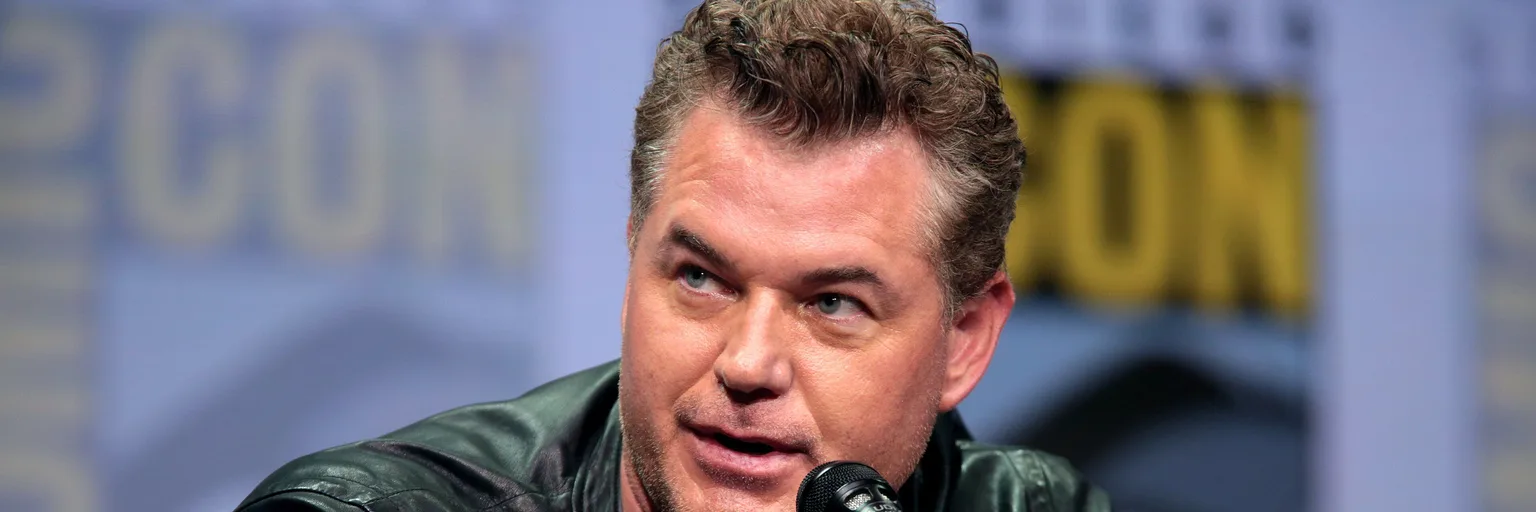
Fedez vs. Marracash: Credibility Is Milan’s Real Rap Battle
The clash is not really about broken windows. It is about whether wealthy artists can still speak for the city, its anger and the politics of attention.
Photo: Davide Di Ninno / Wikimedia Commons (CC BY 2.0)
Celebrity feuds usually arrive prepackaged: two famous people, a few cutting lines, and an audience invited to choose a team. But the clash between Fedez and Marracash is more interesting—and more uncomfortable—than that. It asks who gets to speak credibly about Milan, inequality and social responsibility once an artist has become part of the very status economy being criticized.
The immediate dispute followed unrest in Milan involving damaged storefronts, looting and clashes with police. Marracash had written that “with peaceful means you don’t change things,” then clarified that he had never called for violence and argued that the actions of minors should be read as symptoms of a wider social failure. Fedez responded on Instagram with a broad attack on artists who support the protests while also displaying luxury, appearing at fashion events and benefiting from the aspirational culture represented by the city’s storefronts. Open reports that his remarks appeared to point toward Marracash, who had been photographed with Milan mayor Beppe Sala at La Scala.
The real argument is not protest versus order
Fedez’s strongest point is also the one most likely to irritate his own audience: artists are not outside the marketplace they criticize. His argument is that rappers help sell a vision of success through watches, clothes, travel, fashion shows and visible wealth. When storefronts become symbols of exclusion, the performers who have helped turn those symbols into cultural shorthand cannot simply borrow the language of rebellion when it is useful.
That is a serious criticism because it includes himself. Fedez explicitly acknowledged that he had traveled the same path from deprivation to conspicuous success, and that artists share responsibility for promoting the lifestyle now provoking resentment. This self-indictment gives his intervention more force than a standard lecture about public order.
But it does not automatically make his position superior. Confessing complicity is not the same as resolving it. A wealthy artist can recognize the social effects of a system and still argue that smashing shops is destructive. The problem is that Fedez’s critique risks shrinking a complex political question into a morality tale about hypocritical rappers. That may be excellent content. It is less obviously excellent civic analysis.
Marracash is defending the right to speak after success
Marracash’s answer targets the opposite assumption: that money cancels political credibility. He said he reached his first money around age 30, is now 47, and built his career through work after coming from a difficult environment. His argument is straightforward: becoming successful does not erase the earlier half of his life, nor does it prevent him from wanting a fairer society. Virgilio summarizes his clarification that he condemns violence while seeing the actions of young protesters as evidence of deeper social failure.
In our view, this is the more defensible principle. Political speech should not be treated as a privilege reserved for people who remain poor, anonymous or perfectly consistent. If only the economically powerless may discuss inequality, public debate becomes a purity test rather than a conversation.
Yet Marracash has his own credibility problem. His language about rebellion is emotionally legible but politically slippery. Saying that peaceful methods do not change things can be understood as a call to pressure institutions—or as applause for disorder. On social media, ambiguity is not a subtle rhetorical tool for long. It is raw material for headlines, clipped videos and opposing camps.
Milan turns every position into a performance
The La Scala reference matters because it supplies the perfect visual contradiction: the rapper beside the mayor at an elite cultural event, then speaking in solidarity with people attacking the symbols of luxury. Fedez’s jab—reported by Today—does not prove that Marracash is insincere. It does reveal how unforgiving the modern attention economy has become. Every photograph is evidence; every association is a political credential; every later statement can be edited into a charge of hypocrisy.
This is why the fight feels less like a disagreement between musicians than a contest over civic identity. Fedez presents himself as the insider who knows how aspiration is manufactured because he profited from it. Marracash presents himself as the outsider who knows that success does not invalidate the anger that preceded it. Both positions are persuasive. Neither escapes performance.
That may be the defining condition of celebrity activism in Italy—and elsewhere. Artists increasingly function as civic personalities, even when they did not seek elected office or formal authority. Their posts reach audiences faster than institutional explanations, and their biographies become arguments. The upside is that public figures can force neglected issues into view. The downside is that political speech is continuously pulled toward the grammar of branding: a sharp line, a recognizable enemy and a message optimized for circulation.
Credibility is consistency, not purity
The wrong question is which rapper is “allowed” to speak. The better question is whether the argument survives contact with the speaker’s own conduct and interests. Fedez is right that artists help construct the aspirational culture they later condemn. Marracash is right that wealth does not erase a person’s history or their right to demand change. Both are wrong if they expect a social-media post to carry the complexity of a movement, a city or a generation’s anger.
The winners here are not necessarily Fedez or Marracash. They are the platforms and media cycles that convert civic disagreement into a rivalry with instant teams. The losers are the young people reduced to symbols: either dangerous vandals or noble rebels, depending on which celebrity is speaking.
Our verdict is simple: listen to both arguments, trust neither as a complete account, and judge celebrity activism by what it clarifies rather than how loudly it trends. Credibility is not the absence of contradiction. It is the willingness to name your own place inside one—and then offer something more useful than another viral round.
No topics yet: start the first one.
More stories
Hilary Swank’s Pregnancy Isn’t the Trend—Our Scrutiny Is
Hilary Swank’s third child at 52 makes later motherhood more visible while exposing the medical realities, privilege and impossible standards around celebrity pregnancy.

Alex Cooper’s Baby Tests Whether Radical Openness Can Stay on Brand
Alex Cooper’s first child is more than a celebrity milestone: it puts her carefully engineered business of intimacy under its most revealing pressure test yet.

Mentissa won The Voice Kids. Racism tried to rewrite the victory
Mentissa’s story exposes the ugly bargain behind talent-show fame: a trophy can open the spotlight while public prejudice tries to decide who deserves it.

Eric Dane’s Memoir Makes Celebrity Pain Impossible to Keep Polished
Eric Dane’s posthumous memoir matters less for its drug list than for the uncomfortable question it raises: can celebrity pain be shared without becoming content?