AI Face is a beauty standard nobody voted for, and that's the danger
The "AI Face" look isn't dictated by any one authority, which is exactly why it spreads so easily, and why the real risk is that we start editing ourselves to match it.
AI-generated image
What happens when the most beautiful version of your face isn't in the mirror, but on your screen, generated in seconds? That is the uncomfortable question behind "AI Face," the trend Italian outlet ANSA put at the center of its weekly trends segment this week.
ANSA frames the phenomenon as a quiet, even "subdola" (insidious) shift: people wanting to resemble an AI-generated version of themselves. A companion piece asks whether AI is changing how we perceive our looks, why we prefer our artificial version, and whether limiting filters will be enough to protect younger users.
The ideal with no author is the hardest to resist
The most telling detail comes from Gazzetta di Reggio's coverage: the new thing about AI Face is that nobody has officially decided what the ideal face should be. It stems from a mechanism that makes faces uniform.
Old beauty standards had culprits: a magazine cover, a casting director, a brand. You could be angry at them. AI Face has none. A related analysis on Agenda Digitale describes an "algorithmic aesthetics" built on patterns, behavioral feedback and engagement optimization, and warns of new risks of emotional manipulation.
In our view, that is what makes it more potent than the filters of a few years ago. A filter was a mask you knew you were wearing. A generated "better you" looks like a plausible you, a face that could exist if you just tried a little harder. That is a more insidious pitch than "be someone else."
Flattening is the feature, not the bug
If the ideal is produced by a system rewarded for what gets engagement, it will probably drift toward whatever the average eye rewards. We think the likely result is predictable: smoother, more symmetrical, more interchangeable faces. Nobody has to plan it. A mechanism that unifies faces, as the Gazzetta piece describes, points the same way.
That is the cultural cost nobody is pricing in. Faces are one of the last things that make crowds look like crowds. A standard that quietly trims the outliers doesn't just hurt self-esteem. It makes us a little more boring.
The risk is the target we start chasing
The sharpest warning we found comes from an Italian piece on paginesispa.it: the main risk is that this digital aesthetic is perceived as a concrete goal, feeding expectations that are hard to meet even after technically successful procedures. The Wom quotes Losso cautioning that AI can create images that ignore anatomical limits, building expectations no treatment can satisfy. That is the trap. A photograph can be adjusted infinitely. A face, a clinic or a budget cannot.
We'd be careful not to overstate it. The Wom's headline says 15% of British surgeons see requests that look "AI-made," but that is a headline figure, not a study, and we haven't seen solid data on how widespread this is. This is a trend piece, not a diagnosis of a generation. But the mechanism is credible, and it fits what we already know about filters and body image.
Filters alone won't fix a comparison that happens in your head
Limiting filters for teenagers, which is the policy question ANSA raises, is probably necessary but not sufficient. The comparison with a generated face happens in your own head, with no filter on at all.
Our recommendation is simple. Treat your AI-generated "best version" the way you'd treat a retouched ad: interesting, possibly fun, and not a brief. If you catch yourself bringing it to a mirror, or to a clinic, ask who decided that face was better. The honest answer, according to the very people describing the trend, is nobody. That is a lousy reason to change yours.
No topics yet: start the first one.
More stories
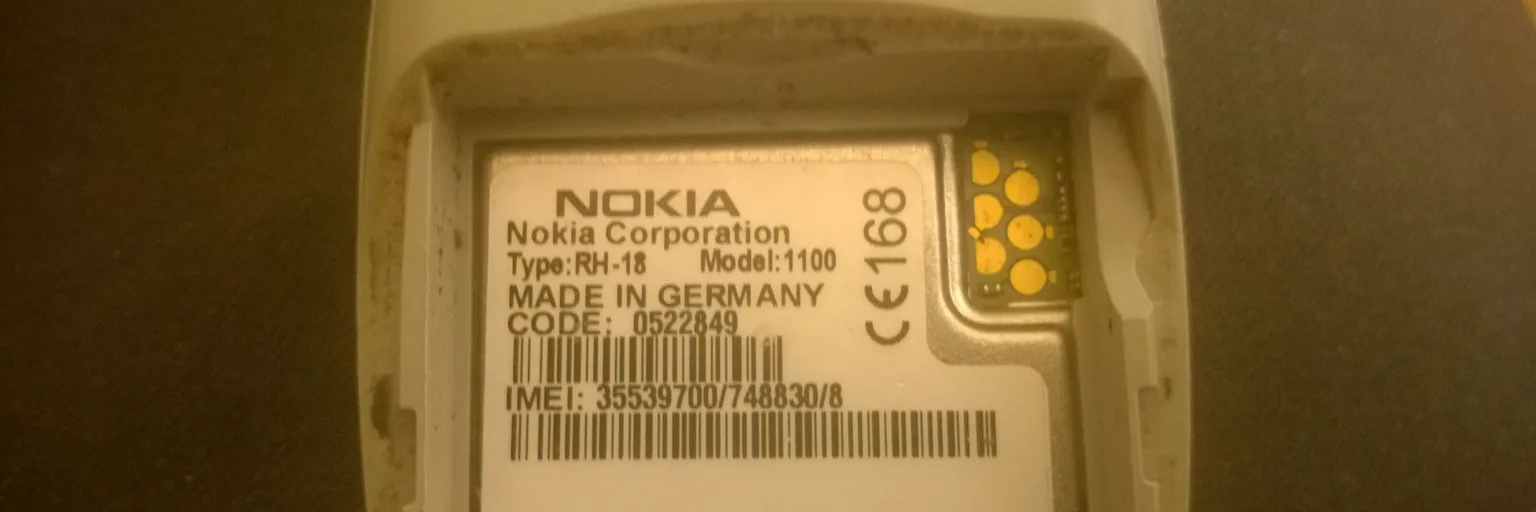
The Nokia 1100 is back, and it's a protest, not a nostalgia trip
Young people are eyeing a 2003 phone with no internet. It's less retro cosplay than a quiet rebellion against screens, and it only works if you accept what you give up.
The November Theory proves a calendar is a terrible relationship test
Turning November into a make-or-break deadline for love, or for abstinence, is great meme fuel and a lousy way to judge whether a relationship is real.

Low T is the new flex, and that's a bit too tidy to trust
Shrugging at low testosterone is a fair rebuke to alpha-male optimizing, but turning a lab value into a personality swaps one performance for another.
Morat is right: the concert ticket is now a status symbol
When going to a show is about being seen there, the music becomes the backdrop. Morat's FOMO warning points to a real cost of live culture, though not the whole story.
